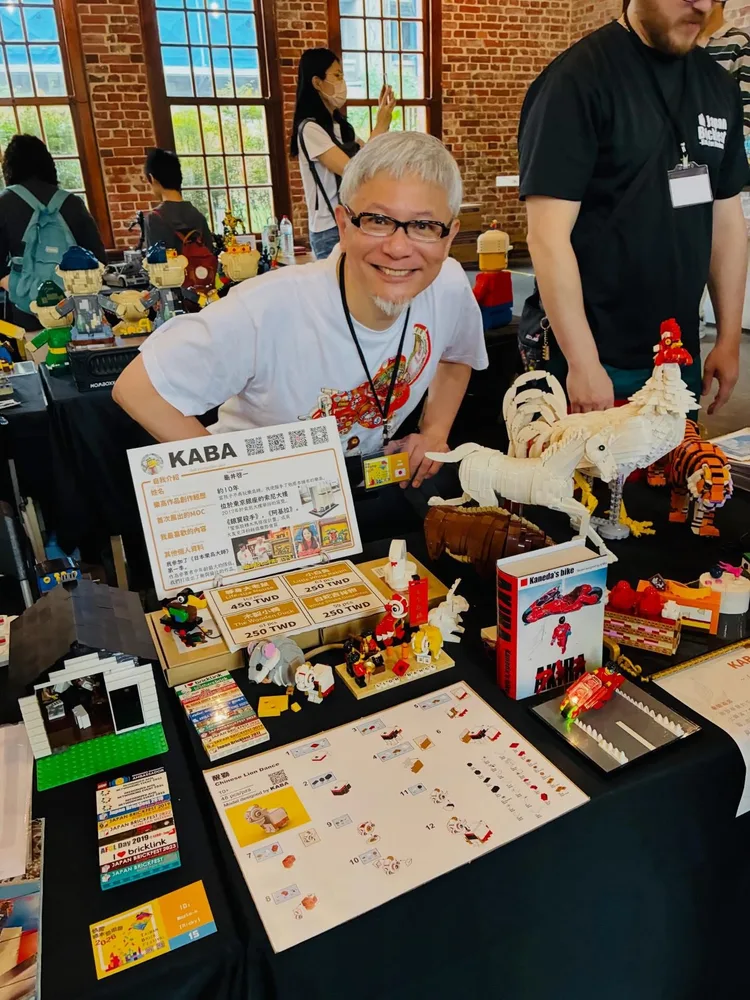


Keiichi Kamei (known as KABA) treats ABS plastic not as a rigid toy medium, but as an expressive canvas for capturing the organic soul of living subjects and sci-fi icons. Merging the analytical precision of an engineer with an artist’s eye for anatomy, he pioneers custom cross-sectional techniques like his CT Modeling method to sculpt natural curves, fluid muscle, and dynamic balance at a compact scale. For Kamei, building is a deeply personal interpretation of form where rigid geometry bends to emotion, proving that even the most stubborn plastic can breathe when driven by curiosity and patience.
The blue light of an LCD screen cuts through the quiet of a room in Japan, casting shadows against walls lined with plastic bins. At the center of it all sits LEGO MOC artist Keiichi Kamei. For him the process of brick-building is beyond following instructions; he intends to capture a soul inside a static form. Known in the global building community as KABA, here’s a man who fell in love with LEGO by building MOCs and not the other way round, and we’ll tell you exactly why.
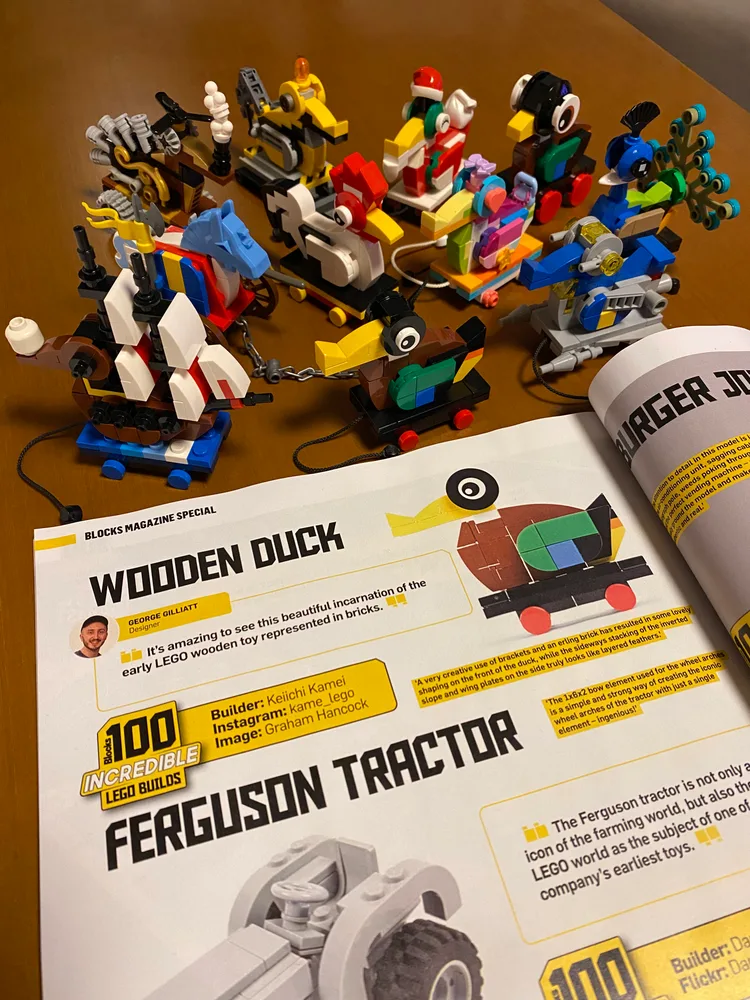
From Engineering to Expression
For forty-nine years, Kamei walked a standard path through life, doing everything that was expected of him. He worked as an engineer, navigated sales and marketing, gained experience in executive support, and eventually built a fulfilling career in corporate communications, all while raising two children alongside his wife.
LEGO was part of his childhood, but never the grand plan. Those plastic bricks were just another box of bits in a shared childhood home, easily forgotten under piles of other toys and games. Neither the art bloomed nor the hobby claimed him until his eldest son and the OG LEGO enthusiast of the family flew the nest in 2012, leaving behind all his LEGO sets as a parting gift for his father.
These were sets that Kamei once built with his son. And with a casual wave, the young man handed over his entire stash and said, “Dad, you can have all my LEGO parts.” In that very moment, a man who had lived around those plastic pieces for most of his life finally let the hobby sink its hooks into him. In that very moment, an artist was born.
That single transaction changed everything, but Kamei didn’t start small. He couldn’t contemplate building a cosy house or a tidy spaceship. Instead, he reached straight for the mood and grit of his favorite science fiction film, Ridley Scott’s Blade Runner and started building the Police Spinner.
Note:> LEGO doesn’t have official Blade Runner sets, but Lumibricks does! Check this out

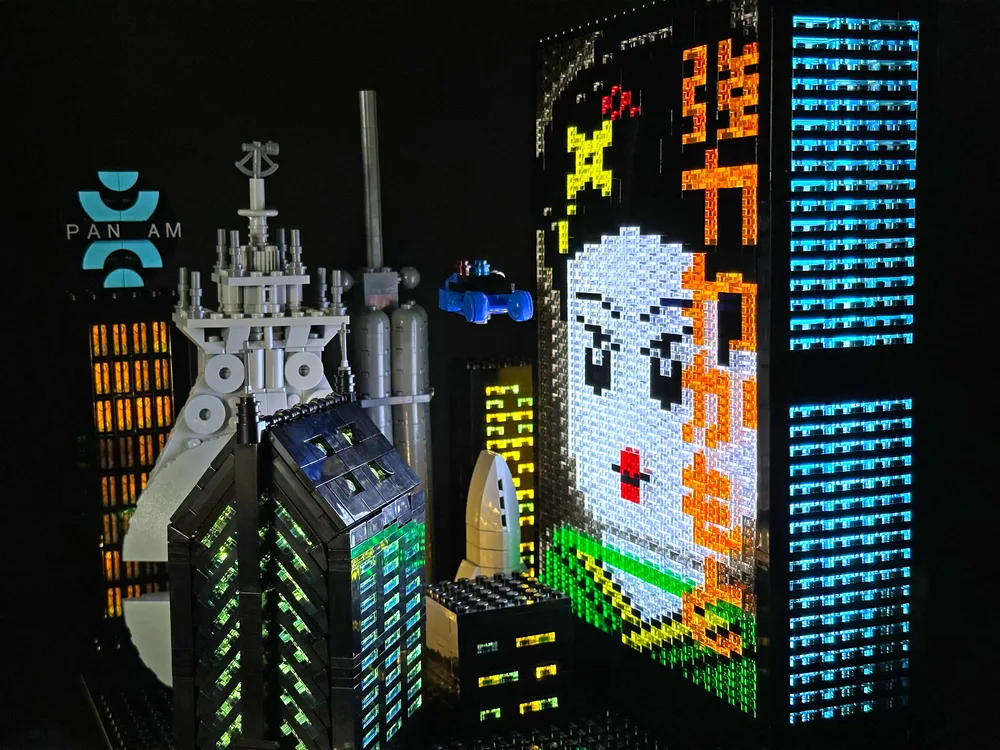
Building the MOC took a few years. When the vehicle was finally finished, Kamei decided it needed a backdrop suitable for photographing. A build like that can’t simply sit on a plain shelf and be clicked, can it? It demands the environment that created it. After all, he was super stoked about holding a piece of that rain-soaked, neon-drenched dystopia in his hands. So his project snowballed the way obsessions do.
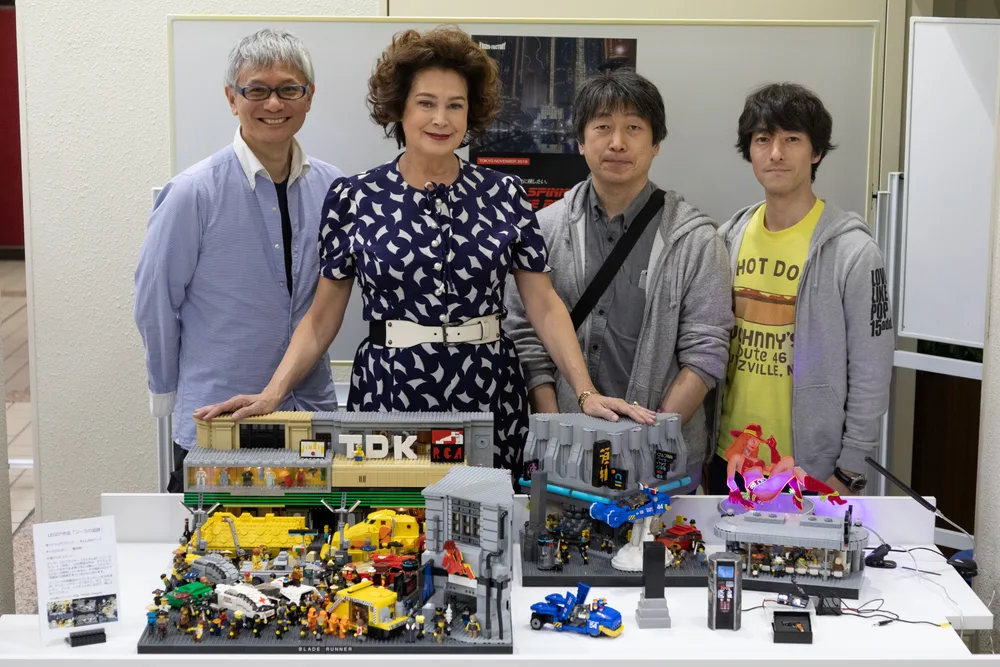
He built the street around it first, gradually expanding the diorama with buildings and vehicles that appear in the movie. “The project continued to grow, and over the following years it evolved into the large LEGO diorama I have today — a recreation of the cityscape from Blade Runner,” Kamei reveals. By the time the dust settled on the MOC, the artist had fallen head over heels for the endless potential of ABS plastic.
LEGO art is Kamei’s reality now. His two kids are grown up and out in the world working; his house has the stillness that comes with middle age. In the daytime world, he moves through corporate communications, dealing with emails, meetings, and strategy. But when the working hours end, he always returns to where his heart is, picking up the bricks to piece together his world of fantasy.
Geometry of Life Expressed Through LEGO Bricks
A fan of Japanese manga artist Katsuhiro Otomo, Keiichi Kamei’s drive to build stems from his love for creating things. “To me, there is no modeling medium as versatile and easy to use as LEGO. I enjoy the process of trial and error, experimenting with different ideas, and the excitement of finally bringing to life exactly what I imagined,” he says.
Sci-fi is a theme he’d nerd out over any day, although his creative output has evolved over the years. His family, Kamei notes with a laugh, was never quite sold on his sci-fi cityscapes, so he had to pivot. Eventually, he found a new challenge in the natural world and started building realistic animal models — a project that became a favorite for both him and his family.
But the work’s been a strange friction. The artist loves things that are organic, fluid, and alive, yet his medium is stubborn, rigid, and obstinate. Plastic bricks are defined by angles, flat surfaces, clutch power, and absolute symmetry. Nature, on the other hand, is all chaos and curves and unpredictable biology. To top it off, Kamei has set himself another puzzle: Make them as small as possible while still capturing their distinctive features.
When he started building his Wild Boar and later Tiger MOC, he realized that standard building methods would never capture the subtle roll of muscle beneath a hide. So he took the challenge and solved the problem by developing his own unique method, the CT Modeling Technique. It’s inspired by the way CT scans work in medical imaging.
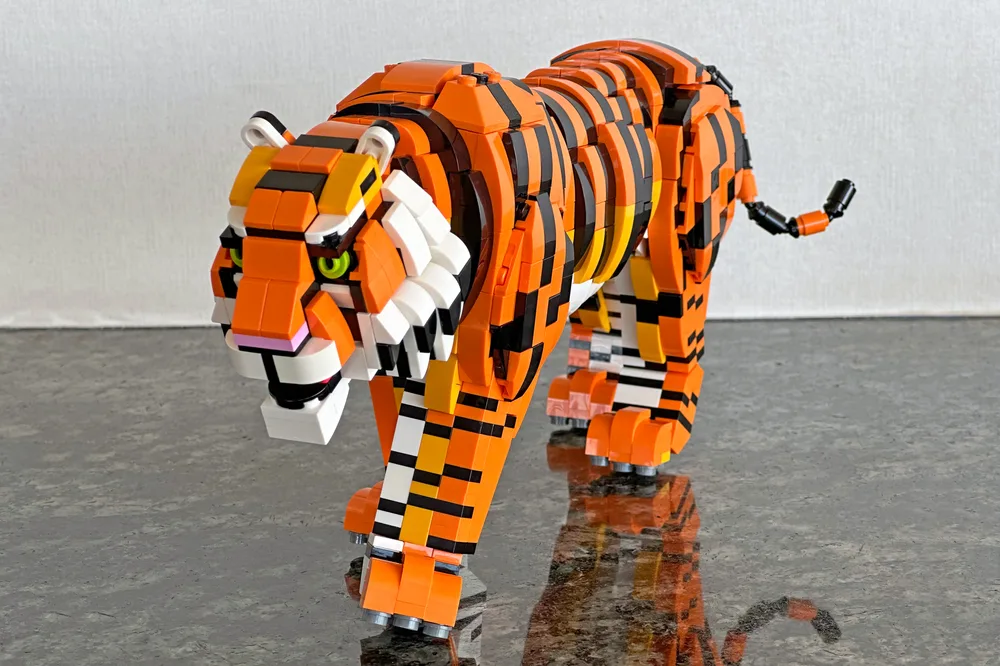
“By dividing the subject into a series of cross-sections and then recreating and stacking those layers, I was able to reproduce its curved shape,” the artist reveals. It’s this kind of relentless experimentation that defines his work. Artist Keiichi Kamei doesn’t rely on shortcuts. When he encounters a shape that refuses to cooperate with standard techniques, he invents a new way to force the bricks to bend to his will. He belongs to that rare breed of people who make their own silver lining when they can’t find one.
Now, building a living creature out of LEGO bricks at a minimal scale could sound impossible until you see what Kamei can pull off. Take his Shoebill Stork MOC for instance. The model, created for a MOC contest with the theme ‘cute animal,’ is a study in personality. The bird is an awkward, rather comical creature with a heavy, oversized head and legs that look like toothpicks — far from cute and definitely a structural nightmare.
Editor’s Note: Planning your own true-to-scale MOC or translating real-world dimensions into studs and plates? Check out our Brick Scale Calculator to automatically calculate exact ratios, vertical plate conversions, and stud-snap dimensions.
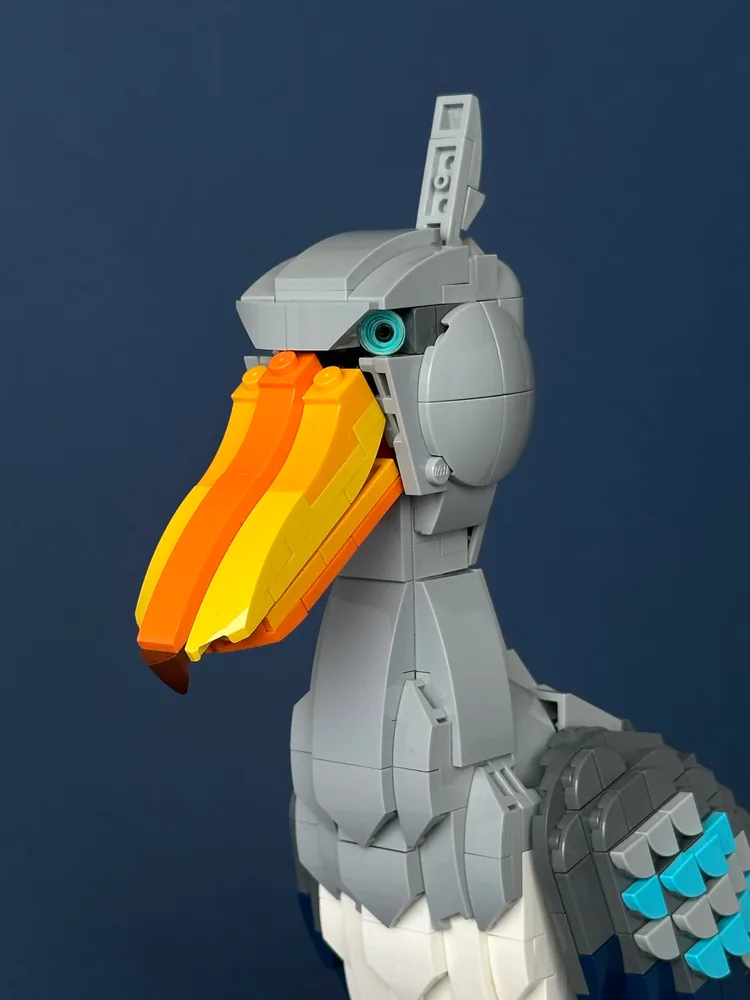
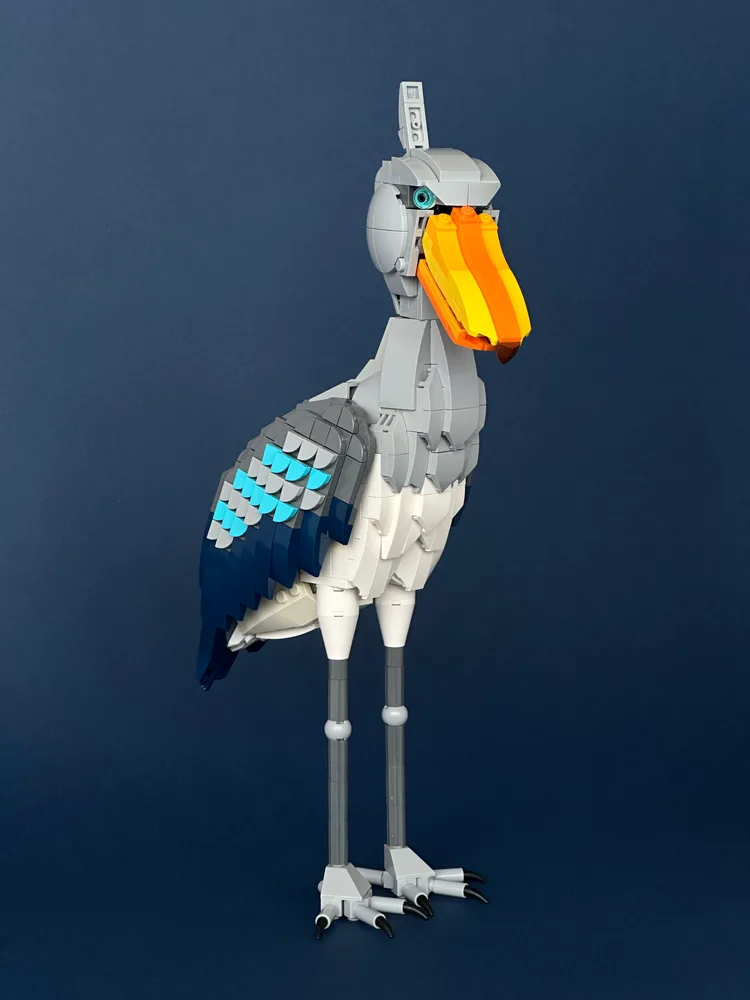
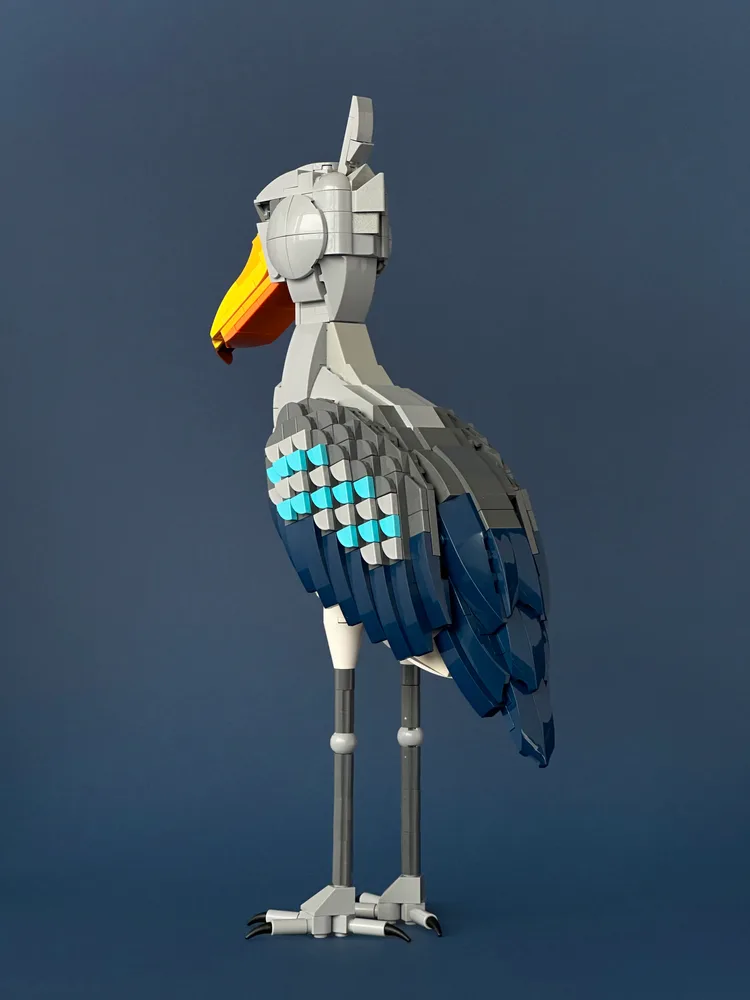
Kamei spent over 200 hours testing angles and balances to figure out how to make the build stand up without collapsing under its own weight. He even engineered a mechanism and hid it behind the forehead plates so the bird’s large beak opens and shuts smoothly without catching on the surrounding plates. Going in line with the theme, the drab swamp colors were swapped for more vibrant tones for the beak and feathers to give the bird a bit of a pop-art attitude.

Kamei’s Shoebill Stork MOC is proof that his approach to building is philosophical. He rejects the idea that there’s a single correct way to build with LEGO bricks. Building is a personal interpretation of reality to him. “What one chooses to emphasize and what one chooses to leave out varies from person to person, and each builder has a unique interpretation and style of expression,” he says.
Beyond the animals, Kamei has recently started exploring the world of sweets and desserts. Whatever the subject, he’s always searching for the same thing: the right balance between the realism of the subject and the specific, blocky aesthetic of the bricks. He does not want the model to look like a statue; he wants it to look like a LEGO model that possesses the essence of its subject.
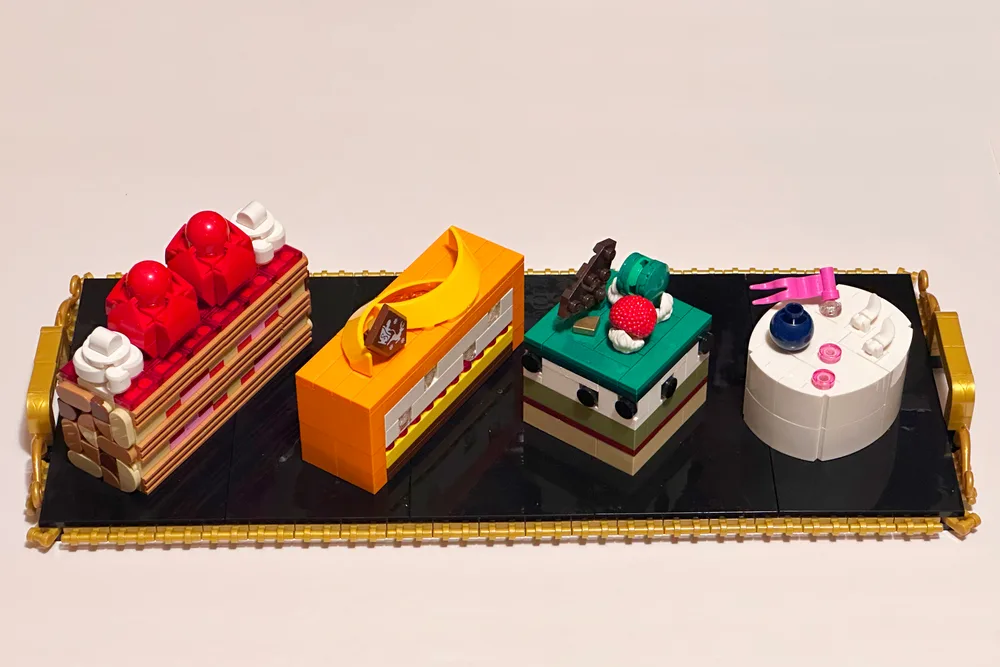
The artist finds joy in the process. For him, LEGO is both versatile and accessible, yet difficult to refine. “At first glance, it may seem that anyone can do it, but in reality, it’s not quite that simple,” he explains. Kamei sees the bricks as a collection of possibilities, an infinite set of building blocks that allow him to bring his internal imagination into the physical room.
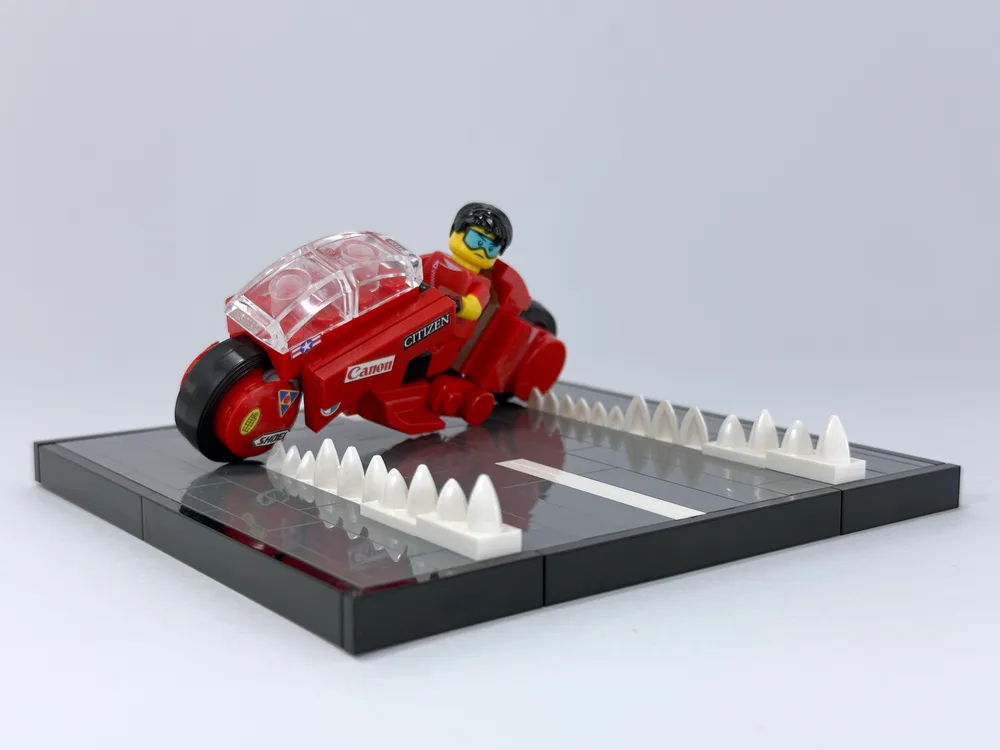
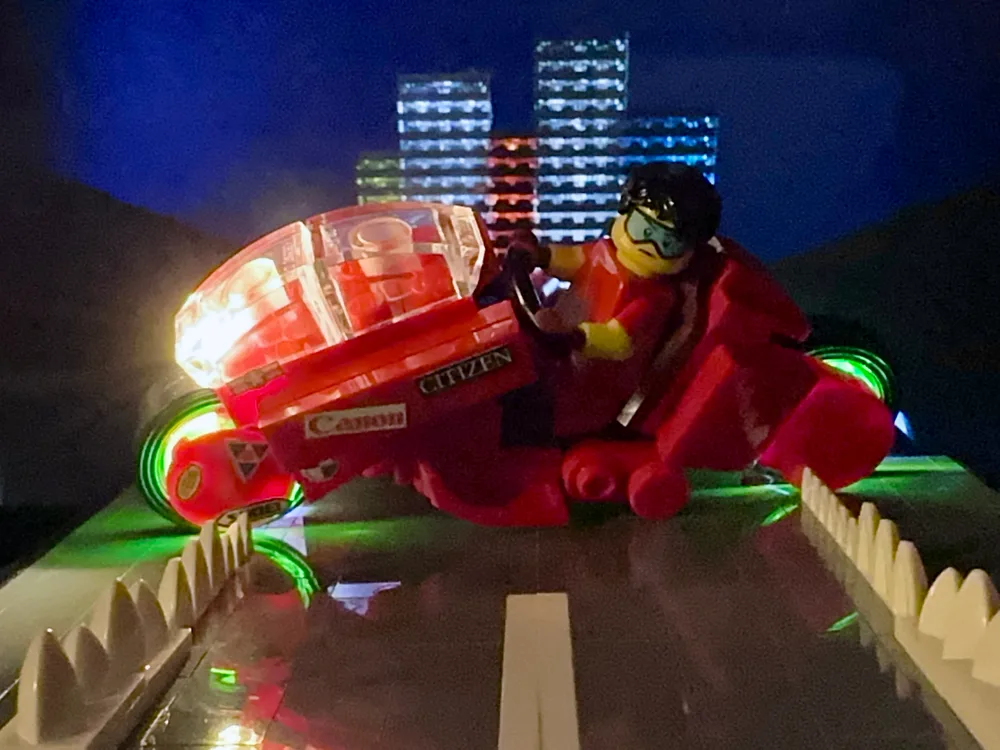
Quiet Ritual of a Spirited Mind
Artist Keiichi Kamei doesn’t have a romantic ritual for this work. There’s no candlelight or dramatic midnight sessions fueled by black coffee or even curated playlists of moody soundtracks.
Sometimes he plays music, but admits that once his fingers find the rhythm of a build, the sound just fades into white noise. The build commands his full attention, pushing everything else into the periphery. The room shrinks and the outside world drops away, leaving only the click of the bricks snapping into place.
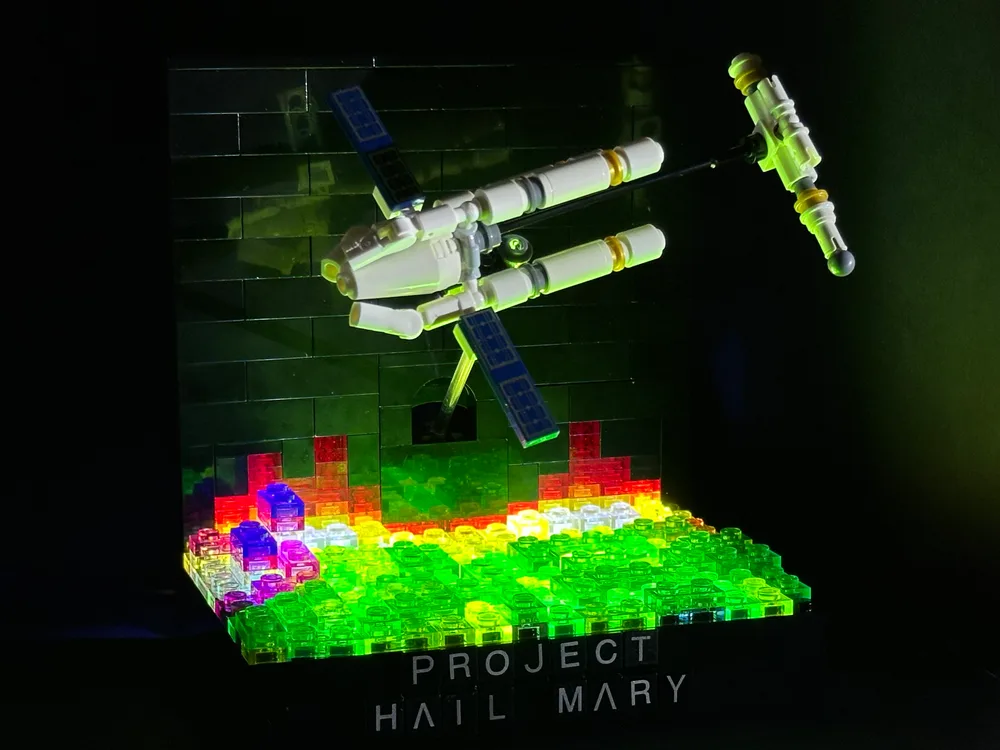
His process bounces back and forth between the digital and the physical. He maps his ideas out on screen using Stud.io software, working out the skeleton of a new model before committing a single physical brick.
That’s only a rough draft, though. Once the digital file is ready, he builds the physical version to see how gravity treats it. If a joint wobbles here or a curve looks clumsy there, he tears it down, goes back to the screen, and fixes the geometry.
There are moments when the creative wall rises, but Kamei doesn’t force it. He knows better than to sit there glaring at a half-finished model, feeling guilty about it. Because this is a hobby and not a job, he simply walks away and fills his mind with other things, trusting that inspiration will eventually demand an outlet.
He doesn’t build to meet quotas or to satisfy a schedule. “I build whenever inspiration strikes. Watching movies, visiting art museums, drawing illustrations, and exploring other builders’ MOCs are all great sources of inspiration for me,” says the artist.
The Weight of the Bracket
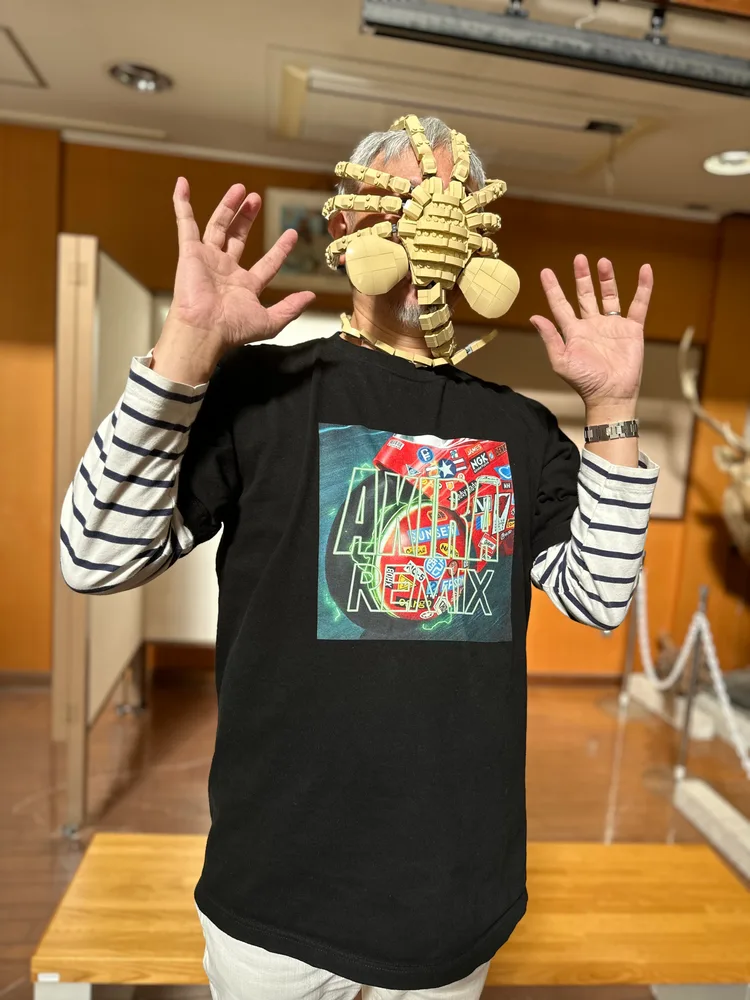
When asked what single part he’d want an endless supply of, Kamei laughs and calls it an impossible question to answer. But he admits he’s got a soft spot for curved slopes and brackets. “I love using them to create smooth curves with SNOT techniques,” he says.
Indeed, these are the tools of disguise. They let a builder cheat the geometry, hiding studs, smoothing out jagged edges of a blocky world, and creating the illusion of skin, fabric, and metal, until it starts to feel organic.
His advice to anyone staring at a pile of bricks with a knot of anxiety in their stomach is to just start. “You’re free to build whatever you want. Explore your creativity, keep experimenting, and don’t be afraid to develop your own techniques along the way,” he says.
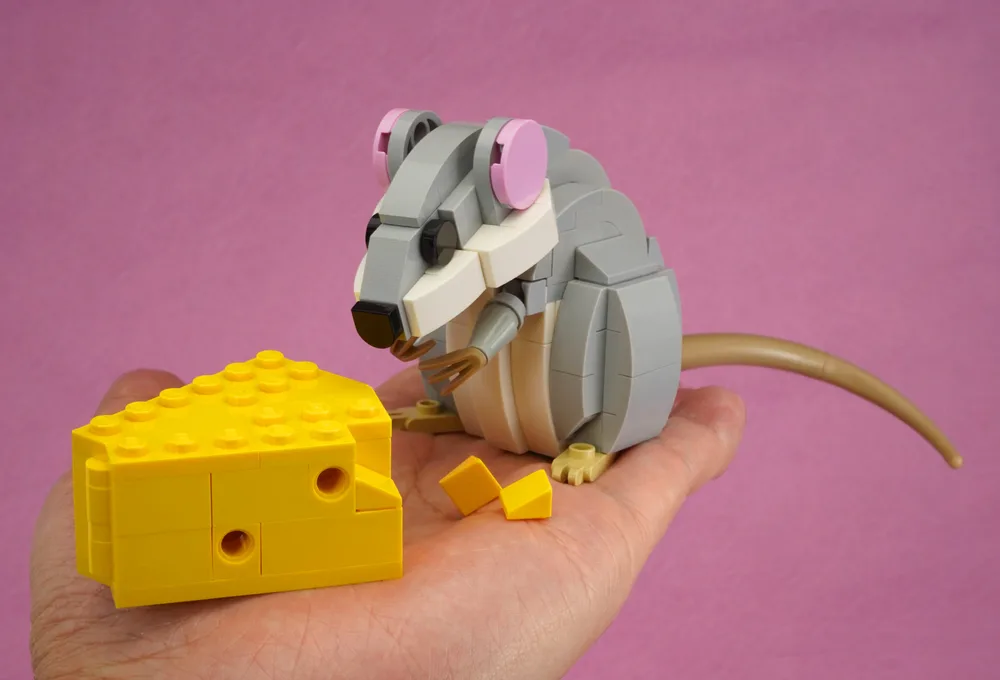
Speaking of techniques, Kamei wants new builders to stop getting caught up in worrying about advanced methods. He believes technique is secondary to understanding. Before a builder touches a single piece, they must figure out what they want to say. Once they have it figured out, they must study their subject.
For instance, if you want to build an animal MOC, don’t just grab bricks and hope for the best. Look at its skeleton first. Watch videos and photographs to learn how it moves. Understand where its weight sits before you ever touch a brick. “Once you understand your subject, you can determine which techniques are needed to recreate it. And if the necessary techniques don’t exist, you can always develop your own,” says Kamei.
Philosophy of the Builder
Artist Keiichi Kamei’s LEGO journey is one of continuous growth, defined by a balance between the structured and the creative, and that between compactness and realism. His life proves that creativity isn’t exclusive to the young or the formally trained, but to anyone willing to roll up their sleeves and put in the reps.
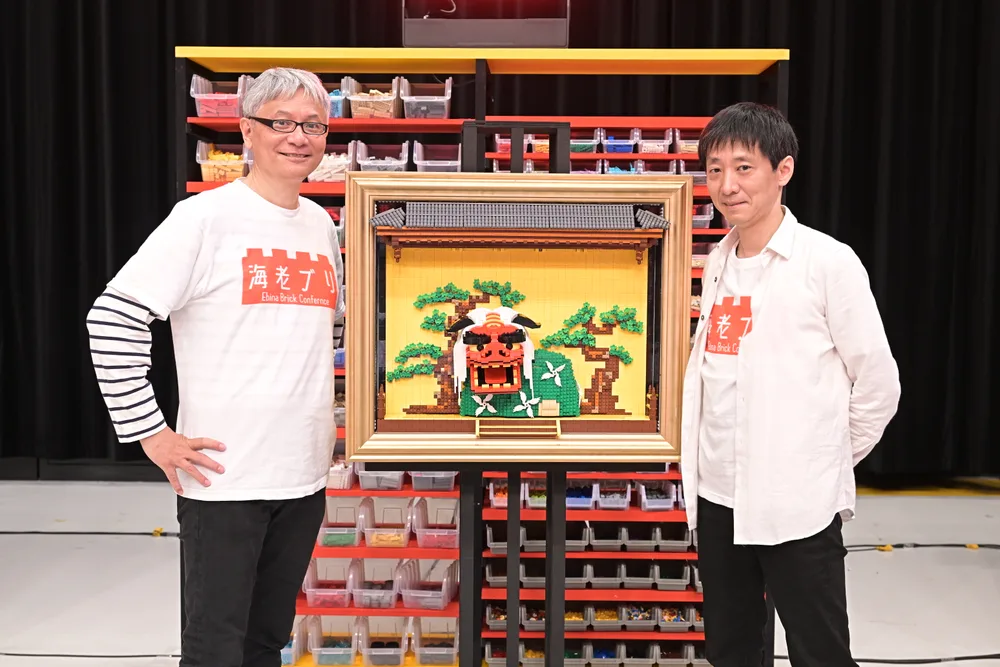
The artist has appeared in Season 1 of LEGO Masters Japan — an experience that has grounded him in a wider community. He’s a firm believer that the bricks belong to the person holding them. There’s no right or wrong way, only the one you choose. Well-designed MOCs that achieve a lot without being overly large inspire him.
He encourages every new builder to let go of their fear. The hobby should never be an obligation, but a way to explore the things that excite you, to experiment with form and color, and to build something that didn’t exist until you made it.
His work will remind you that the most interesting things in life happen when a messy process meets a clear plan. Whether he’s recreating the rain-slicked neon sprawl of a science-fiction dystopia or capturing the comical, stoic gaze of a shoebill stork, Kamei approaches his hobby with the discipline of an engineer and the heart of a storyteller.
Here’s a man who shed his corporate identity to become a LEGO MOC artist, finding his voice in the friction between his professional life and creative freedom. He’s out there to show that it’s never too late to pick up the bricks and start building.