

If you ever walk into an AFOL’s home, you’ll likely encounter two diametrically opposed realities: on one wall sits a pristine, officially licensed, multi-thousand-piece Collector’s Series masterpiece constructed with immaculate, museum-grade precision, and on the workbench sprawls an absolute disaster: a pile of multi-colored bricks that look like a blender had a violent encounter with a plastic recycling plant.
For the past few years, the internet has watched in equal parts horror and awe as a chaotic and unhinged, yet beautiful trend sweeps across digital LEGO communities, TikTok feeds, and subreddits like r/oopsmilleniumfalcon. It goes by a simple, three-word challenge that has entirely rewired how thousands of people interact with their bricks:
Will it Falcon?
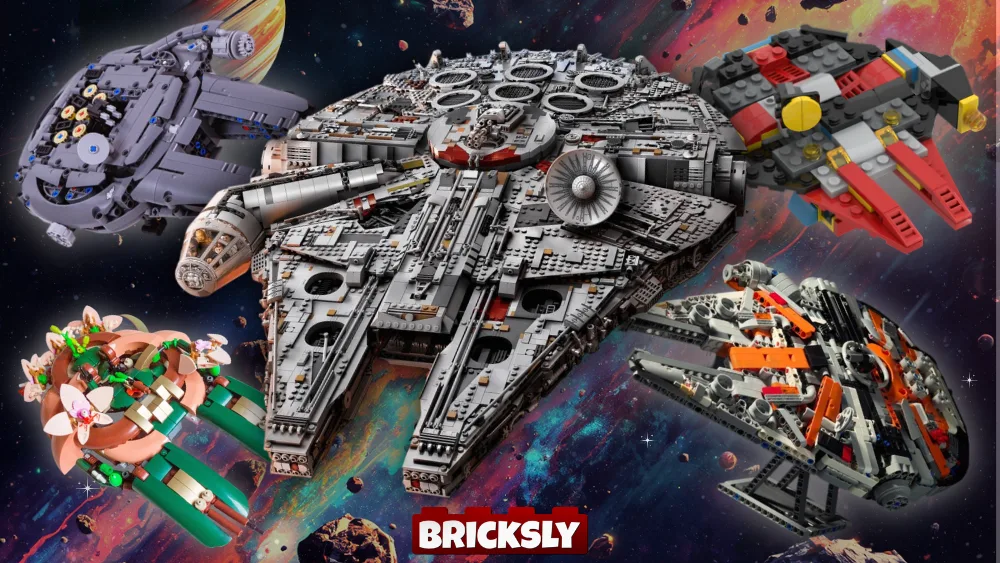
The premise is a no-brainer: Take a random LEGO set (one that has zero business intersecting with a galaxy far, far away) and force its inventory into an alternate build of the iconic 75192 Millennium Falcon.
Botanical houseplants, Technic tractors, pastel Disney castles, Speed Champions muscle cars, and Ninjago mech suits have all fallen victim to the trend. The results are magnificent, wacky, brightly colored, and wildly creative. But beneath the surface-level humor brews a grassroots creative rebellion — one against modern toy culture, corporate perfectionism, and the death of pure, unstructured play.
Anatomy of a Meme: From Accidental Curses to Deliberate Madness
Every great internet subculture needs a genesis myth. Following suit, the “Will It Falcon?” phenomenon draws from the universal struggle of the intermediate builder.
For decades, the standard path of LEGO ownership was linear: buy a box, open the bags sequentially, follow the steps in the instruction booklet, and place the finished model proudly on a shelf. Yet, any builder who’s ever dumped a loose bin of bricks onto a living room floor recognizes the siren song of the scrap pile all too well.
In the early days of online LEGO forums, users would occasionally post panicked or triumphant photos of their attempt to build something recognizable out of a limited, randomized collection of parts. Inevitably, when faced with an asymmetric pile of odds and ends, the human brain defaults to its cultural baseline: Can I make a spaceship? Specifically, can I make the Millennium Falcon?
What started as an accidental internet joke (and people posting cursed, misshapen gray blobs with the caption “Tried to build the Falcon from memory, how did I do?”) gradually turned into an aggressive, competitive creative challenge. Builders stopped asking, “Can I build a Falcon if I don’t have instructions?” and started asking, “Can I build a Falcon out of a 700-something-piece bouquet of plastic pink roses?”
The rules of the game were thus set:
-
Zero External Parts: You can only use the elements included in the specific set you have chosen. No sneaking in extra gray plates or classic cockpit windshields from your spare parts bins.
-
The Silhouette Must Hold: It doesn’t matter if the ship is neon pink or lime green, or held together by sheer prayer and friction. From a bird’s-eye view, it must possess the unmistakable geometry of the Corellian YT-1300 Light Freighter: the saucer body, the two wedge-shaped mandibles, and the offset cockpit jutting out to the side.
-
Embrace the Curse: The uglier, more absurd, and more structurally precarious the final model is, the more community street cred it earns.
How Constraints Breed Creativity
To understand why “Will It Falcon?” resonates so deeply with LEGO builders, you must understand the psychological shift in modern hobbyist culture.
LEGO has evolved dramatically over the past two decades. The company’s core demographic has aged up significantly, leading to the explosive growth of the AFOL community. To cater to adults with disposable income, LEGO began producing massive, high-end sets designed explicitly for display.
These sets are engineering marvels that use clever interior Technic skeletons, hidden color-coded bricks to aid assembly, and complex geometry that results in a sturdy, display-ready artifact. However, an unintended side effect to this corporate perfectionism is its intimidation factor.
When a set costs several hundred dollars and is designed to look like a miniature movie prop, the margin for error feels razor-thin. Many builders report a subtle sense of anxiety when constructing such official sets: What if a piece goes missing? What if the sticker is crooked? What if altering it ruins the value?
“Will It Falcon?” acts as a rebellious, yet therapeutic antidote to this corporate sterility. By taking a pristine, perfectly engineered set — such as a tranquil Japanese Garden or a sleek F1 race car — and violently deconstructing it to force it into a lumpy, mismatched space freighter, builders reclaim ownership over their bricks.
Constraints are the ultimate catalyst for creativity. When you have access to every brick ever manufactured, design choices can become paralyzed by infinite options. But when you’re told, “You can only build a Millennium Falcon, but you may exclusively use the pieces found inside this box of pastel-colored Friends bakery set,” your brain is forced to look at every individual element not for what it is, but for what it could represent.
-
A pink cupcake wrapper becomes a thruster nozzle.
-
A curved yellow mudguard becomes the leading edge of a mandible.
-
A trans-clear wine glass piece becomes the hyperdrive motivator.
-
A minifigure’s top-hat becomes the erratic, crooked radar dish.
This is improvisational jazz played with plastic. It bypasses the instructions and forces builders back into the chaotic sandbox state of childhood imagination.
Hall of Fame: Top 5 Weirdest, Wildest, and Most Cursed Falcons
To truly appreciate the scope of the trend, you must check out these 5 legendary builds that have circulated through the community, each representing the triumph of stubbornness over material logic.
1. The Botanical Falcon
Perhaps one of the most aesthetically jarring subversions involves LEGO’s popular Botanical Collection. In it, the set 10343 Mini Orchid consists almost entirely of pink, green, and brown elements designed to mimic flora, complete with flexible stems, petals, and soil pieces.
When user 4amWater on Reddit forced this set into a Millennium Falcon, the result looked less like a spaceship and more like an organic, bio-mechanical organism straight out of a Cronenberg film. The forward mandibles have been constructed out of stiff green plant stems, while the cockpit is cobbled together from flower pot casings.
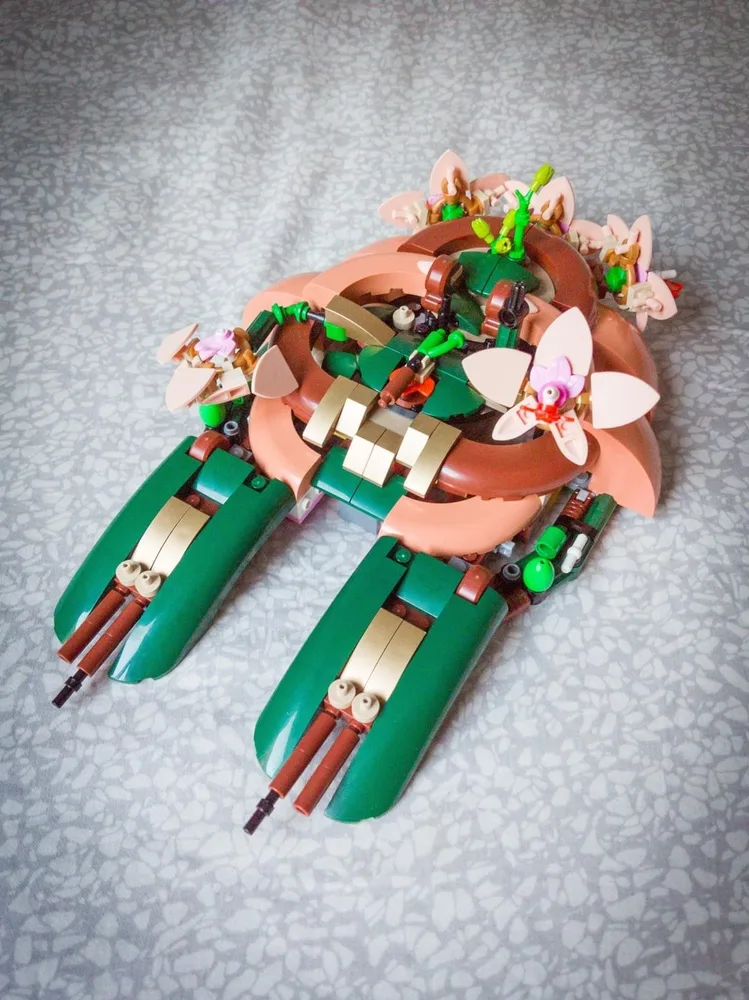
Yet, against all laws of aerodynamics and physics, the distinct silhouette remains. It’s simultaneously elegant and wacky — a ship that looks like it was grown in a greenhouse on Naboo rather than welded together in a scrapyard on Corellia.
Something similar was done with the 11506 Rocking Plants by builder BambiOmega on Instagram:
2. The Super Robot Falcon
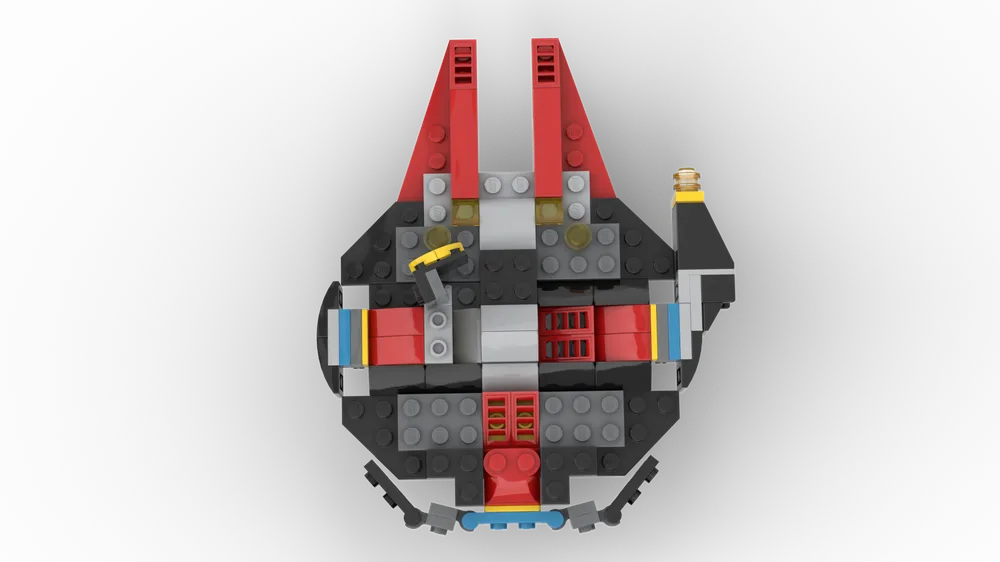
Shared by user stanisi on Rebricklable, this build subjects the 31124-1 Super Robot set (retired) to its ultimate metamorphosis. This set is a poseable mech featuring massive, chunky limbs and bright red, blue, and yellow armor plates.
Rather than resulting in a humanoid warrior, the sharp angles of the robot’s shoulders and leg segments are aggressively reconfigured to form the iconic wedge-shaped mandibles and central hull of the Millennium Falcon.
Because the source inventory includes ball-joints and clip hinges, this version even comes equipped with a custom display stand, letting the brightly colored mech-turned-freighter hover in mid-air in all its blocky, high-contrast glory.
3. The Technic Falcon
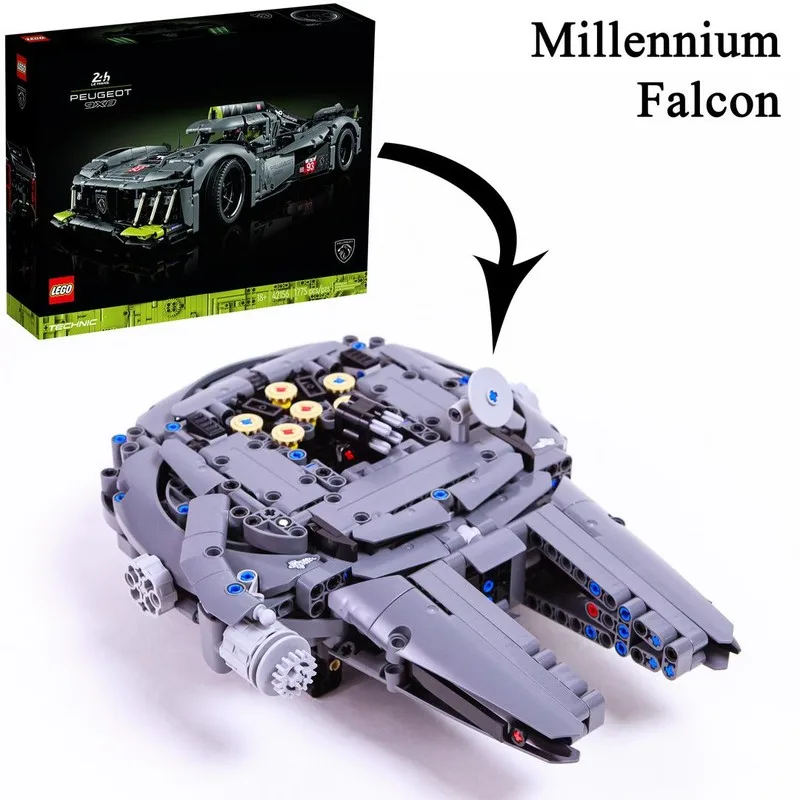
Technic sets are designed for mechanical function, featuring gears, axles, panels, and suspension beams rather than traditional system bricks. Building a Falcon out of a Technic vehicle is an exercise in structural madness.
Because Technic beams do not clutch together like standard plates and bricks, builders have to rely on pin-and-axle geometry to lock the frame into place. The resulting Falcon usually ends up resembling an exposed, industrial skeleton or a raw-iron industrial freighter that looks like it has survived half a dozen brutal hyperspace crashes, but is stunning nonetheless.
Here’s one shared by user klimax on Rebrickable. It’s made using 49% of the 42156 Technic Peugeot 9X8 24H Le Mans Hybrid Hypercar set, and looks dope.
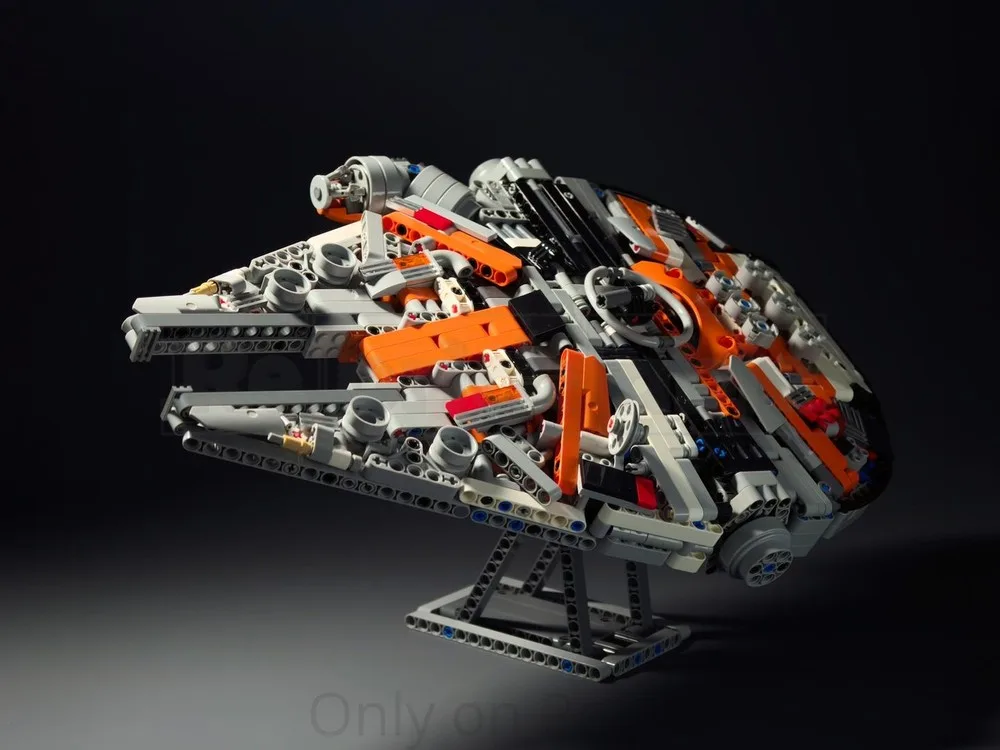
Another one shared by user nopingrid on Rebrickable is made using the 42128-1 Heavy-duty Tow Truck (retired) and includes a working ramp, a rotating stand, working landing gears, and openable panels that expose the ship’s mechanisms. How cool is that!
4. The Vibrant Falcon
Nothing tests the gritty aesthetic of the Star Wars universe quite like a palette of bright colors. When builders take whimsical, youth-targeted themes like LEGO Disney and DreamZzz and apply the “Will It Falcon?” treatment, the juxtaposition is hilarious.
Han Solo’s grease-stained, space-faring hunk of junk suddenly looks like it popped out of some pump at a Barbie dreamhouse factory. It’s very bright, very cheerful, and utterly absurd, proving that the spirit of the rebellion doesn’t care for color schemes, but only the shape.
The work of Bradley Barber (@creationcaravan4 on Instagram) is worth noting in this regard. Here’s a MOC artist who dares to falconize every LEGO set — from 43266 Cinderella’s Dress to 43243 Simba the Lion King Cub, 71453 DreamZzz Izzie and Bunchu the Bunny, 31170 Wild Animals: Pink Flamingo, and everything in between!
5. The Micro Falcon
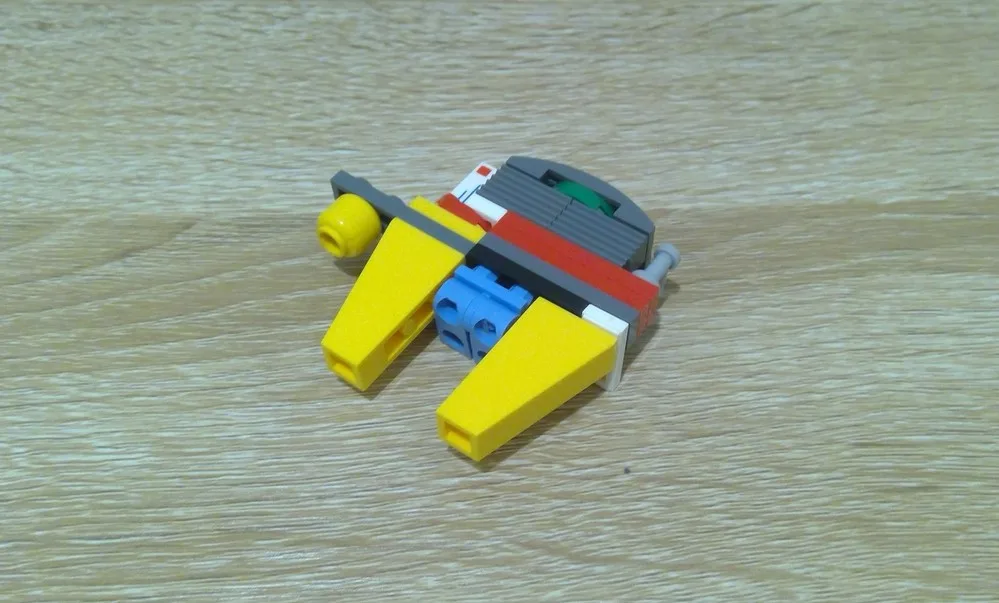
Built by user forfarfeld and shared on Rebrickable, this micro-scale creation transforms the humble 60100 Airport Starter set (retired) into a remarkably recognizable pocket-sized Falcon (accompanied by a tiny, equally absurd build of Jar Jar Binks).
It’s just 29 parts, but despite having fewer pieces than a single instruction step of a Collector’s Series set, it cleverly puts to use the set’s limited cockpit and rotor elements to capture the iconic saucer shape and forward mandibles, once again proving that you don’t need hundreds of bricks to embrace the “Will It Falcon?” rebellion.
The Logic of Form Over Color
One of the most fascinating artistic takeaways from the “Will It Falcon?” trend is its visual communication: form completely dominates color.
In traditional design, color harmony is paramount. If a sculpture or vehicle features clashing neon pinks, muddy browns, and bright yellows all at once, the human eye registers visual noise. Yet, when applied to a Falcon alternate build, the chaotic color palette itself becomes the charm.
Why? Because the Millennium Falcon occupies a unique space in global pop culture consciousness. Its silhouette is as universally recognized as the Eiffel Tower or the Mickey Mouse silhouette.
Because the geometric signifiers — the saucer body, forward mandibles, and cockpit — are hardwired into our brains, the human visual cortex instantly fills in the blanks. Even if the ship is constructed out of rainbow-colored bricks meant for a children’s playground, your brain sees the “fastest hunk of junk in the galaxy” before anything else. It proves that iconic design transcends paint, pigment, and plastic colorways.
The Anti-Master Builder Manifesto
In many ways, “Will It Falcon?” serves as a cultural counter-movement to the official branding of LEGO as a luxury lifestyle hobby.
For years, television shows like LEGO Masters have popularized a hyper-polished style of building: massive, highly symmetrical, cinematic displays built by elite technicians with access to millions of dollars worth of inventory sorted into color-coded drawers. While undeniably impressive, that level of building can feel distant and unattainable for the average AFOL sitting at a kitchen table with a half-empty box of bricks.
The internet-driven trend brings democracy to creativity. It sort of tells the casual fan: You don’t need a multi-million-piece stockroom. You don’t need an engineering degree. You just need a terrible idea, a mediocre set you bought on clearance, and the audacity to falconize it.
A distinct punk-rock ethos is embedded within the trend. It’s DIY culture applied to ABS plastic, celebrating imperfection, structural failure, and the beauty of the hack job. When a builder posts a photo of a hyperdrive built out of a motorcycle engine and a frying pan piece, they aren’t looking for museum validation, but shared laughter of a community that understands the joy of breaking the rules.
The Rules of Falconization: Can You Do It?
If you want to join the ranks of the chaotic “falconizers” pushing this trend forward, you don’t need special training. You just need to follow the unofficial “Falconization Protocol”:
-
Select Your Victim: Go to your shelf, pick a LEGO set that has no business being a spaceship, and dump all the pieces into a pile. Bonus points if it’s an adorable animal (like 21349 Tuxedo Cat) or a historic landmark (like 21034 London).
-
Identify the Core Anchors: Find whatever pieces in the inventory can best represent the cockpit and the two mandibles. Everything else is secondary filler.
-
Throw Out the Rules of Structural Integrity: If a plate doesn’t click down smoothly because three other pieces are blocking it, wedge it in at an angle. The Falcon is famous for being held together by duct tape and spare wires; your build should reflect that canonical lore.
-
Step Back and Squint: If it looks like a total mess from up close, take three steps back, squint your eyes, and ask the ultimate question: Is it a hunk of junk? If yes, congratulations! You’ve successfully falconized your set.
Long Story Short, Long Live the Hunk of Junk
As long as corporate toy manufacturers produce neat, clean, orderly boxes of plastic bricks, humanity’s chaotic drive to subvert them will persist.
“Will It Falcon?” is more than just a passing social media joke or a quirky Reddit hashtag. It is a celebration of human ingenuity, a rejection of perfection, and a reminder that play doesn’t need instructions to be meaningful. Whether it’s built out of gray starfighter panels or bright pink cherry blossoms, the LEGO Millennium Falcon remains a universal symbol of scrappy defiance.
So the next time you find yourself staring at a random LEGO set collecting dust on your shelf, whether it’s a dinosaur, a sports car, or a potted plant, ask yourself the question that has captured the imagination of the internet:
Will it Falcon?