


Walking into a LEGO aisle this spring feels a tad different, all thanks to the official rollout of SMART Play. If you’ve spent any time in one lately, you’ve probably noticed the prices creeping up and the boxes getting, well, smarter. But there’s also a genuine buzz around the shelves that I haven’t seen in years.
While LEGO has tinkered with digital apps and augmented reality before, this launch feels like a homecoming. The SMART Play system, which hit shelves on March 1, 2026, is easily the most ambitious leap the company has taken in a generation.
The whole philosophy is “the brick that plays back.” It’s designed to add interactivity — sounds, lights, and motion sensing — without forcing you to stare at a screen. In a way, it feels like LEGO finally figured out how to use tech without ruining the point of the plastic bricks.
Ever since the launch, I’ve been digging into the details, and to me, it looks like a perfect mix of high-end silicon and old-school swooshing around the room with your toys. Isn’t that exactly how we used to play as kids? It’s just that with SMART Play, we now have a bit more magic under the hood.
LEGO SMART Play Product Lineup

The tech debuted exclusively with LEGO Star Wars sets in select markets (US, UK, France, Germany, Poland, and Australia):
| Set Number | Set Name | Key Features |
|---|---|---|
| 75420 | Luke’s Landspeeder | 1 SMART Minifig, 1 SMART Tag |
| 75421 | Darth Vader’s TIE Fighter | 1 SMART Brick, 1 Minifig, 1 Tag, 1 SMART Charger |
| 75422 | Yoda’s Hut and Jedi Training | 2 SMART Minifigs, 2 SMART Tags |
| 75423 | Luke’s Red Five X-Wing | 1 SMART Brick, 2 Minifigs, 5 Tags, 1 SMART Charger |
| 75424 | AT-ST Attack on Endor | 1 SMART Minifig, 2 SMART Tags |
| 75425 | Mos Eisley Cantina | 2 SMART Minifigs, 3 SMART Tags |
| 75426 | Millennium Falcon | 4 SMART Minifigs, 4 SMART Tags |
| 75427 | Throne Room Duel & A-Wing | 2 SMART Bricks, 3 Minifigs, 5 Tags, 1 SMART Charger |
What in the Houdini Is Inside The SMART Play System?
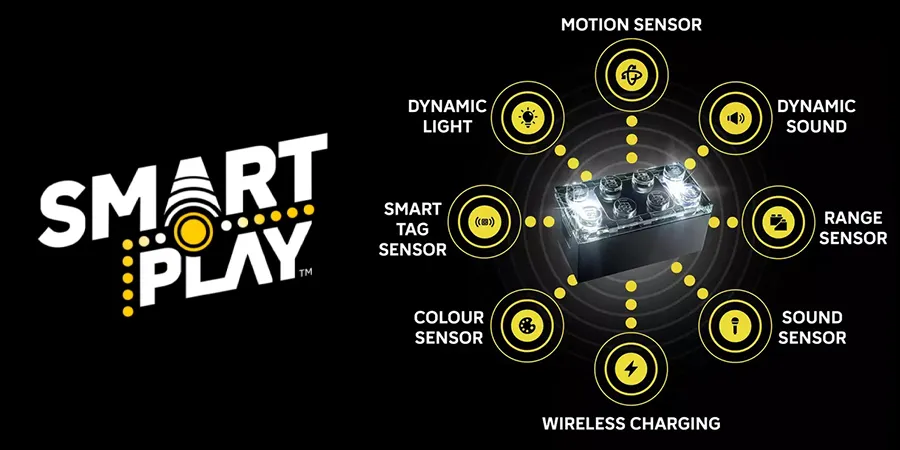
To understand why people like Alec Scherma and the team at Brickset are calling this a new standard, you’ll have to look at the hardware. LEGO’s SMART Play system is built around three high-tech, yet low-maintenance elements:
-
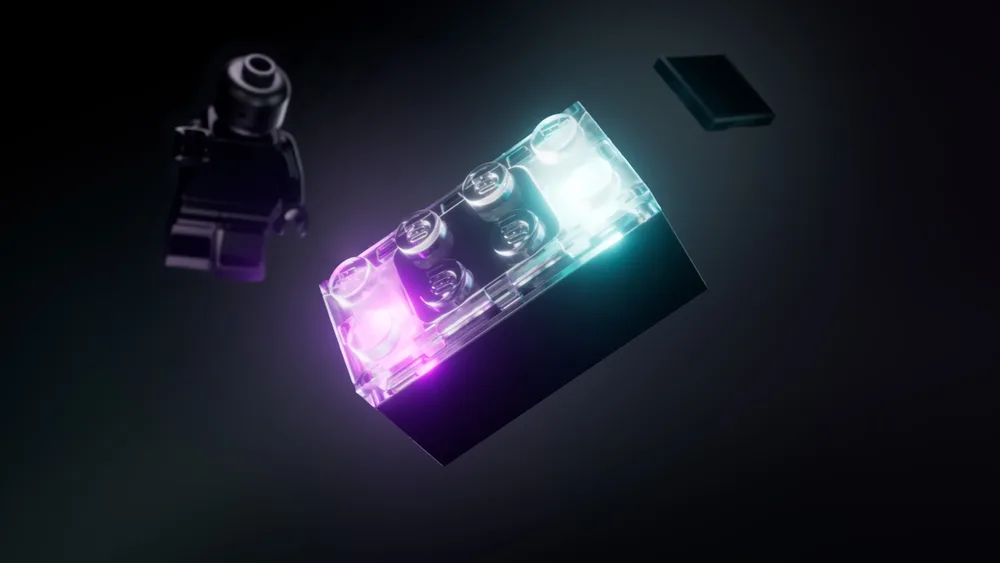
The SMART Brick: A 2x4 brick that acts as the brain of the system. It’s a bit chunkier than a standard brick (about five plates high instead of three) but it fits perfectly into any build. Inside its plastic shell, it’s packed with sensors, a speaker, and a custom computer chip. It uses a built-in synthesizer to generate sounds in real-time based on how you move it.
A SMART Brick has a:
- Six-Axis Gyroscope: This is what allows the brick to feel your hand movements and respond.
- Near-Field Communication (NFC) Reader: This is how it identifies the SMART Tags and SMART Minifigures instantly.
- Mesh Networking: The BrickNet feature lets two separate builds communicate. For instance, if you have the newly launched X-Wing and TIE Fighter in the same room, they can actually engage in a sonic dogfight where the sounds react to each other’s proximity.
-
SMART Tags: Small 2x2 tiles that tell the SMART Brick how to respond to your movements. You snap one onto your ship, and the Brick reads it via magnetic induction. For instance, if you snap a Helicopter tag onto a build, the brick starts making rotor noises. On the other hand, a Speeder tag changes the sound profile entirely.
-
SMART Minifigures: These look like standard LEGO minifigs but contain an internal passive chip that the SMART Brick can recognize. It allows for unique, character-specific reactions and dialogue. For instance, if you bring a SMART Vader near a SMART Luke, the bricks recognize each other through the mesh network BrickNet. They might even start a dialogue or trigger lightsaber clashing sounds.
Why It’s Different

Unlike previous tech efforts like Hidden Side or LEGO Dimensions, the SMART Play system is designed to be screen-free.
Bricks talk to each other via BrickNet, the mesh network, which is Bluetooth-based. If you fly two SMART Star Wars ships toward each other, they actually recognize the proximity and can trigger combat sounds or reactions.
There is an app called Smart Assist, but it’s really just for parents to handle the boring stuff like managing firmware updates, checking battery levels, or turning the volume down when the pew-pew sounds get to be too much. During actual play, the phone stays in a pocket.
Hidden Features and Easter Eggs
LEGO intentionally left certain interactions out of the instruction manuals to encourage discovery. People are now finding that the SMART Brick reacts to things besides just the official tags:
-
Color Sensing: The brick has a small color sensor. Some users found that placing the brick on a green plate triggers repair sounds, while red triggers combat mode.
-
The Sleep Mode: In a demo of a non-licensed dinosaur build, if you lay the SMART Brick flat for more than a minute, it starts making snoring sounds.
-
Motion Sensitivity: The swoosh factor I mentioned earlier is for real! If you do a barrel roll with the X-Wing, the engine pitch actually shifts mid-turn. It’s not just a loop; it’s responding to the G-force of your hand.
How’s the Impression in the Real World?
The tech is undoubtedly impressive. The no-screen promise, especially, is a breath of fresh air. But real stories are coming from the people living with it, and it isn’t all perfect. The reception to LEGO SMART Play has been a mix of tech-geek wonder and typical LEGO-fan grumbling about prices.
After digging through some of the early reviews and community threads from the last few weeks, I managed to get a clearer picture. Here are some examples and anecdotes about how this brand-new system is holding up in the real world:
Angel Madison from Good Housekeeping has highlighted how the screen-free aspect has been a hit with parents who are tired of fighting for their kids’ attention against a smartphone.
On the other side of the coin, you have enthusiasts like Ryan (MandRproductions) who has given a reality check. He’s pointed out that while the R2-D2 head-turning reaction is a dream come true for fans, the premium price is a bitter pill to swallow. It means these sets might stay a luxury for a while. It’s the classic early-adopter dilemma: the experience is great, but you’re paying for the research and development that went into it.
Also, the general consensus from users like CapnRex101 is that this is a tool that adds magic to the building process, even if we’re all still figuring out how to manage the battery life and the $90 price tags.
There are a few complaints, too.
For instance, one of the most surprising details coming from hands-on reviews is how the characters interact. It turns out LEGO didn’t use actual movie dialogue clips. Instead, the SMART Minifigures use a synthesized, gibberish-style speech that reviewers are comparing to Simlish or the grunting from the classic LEGO video games.
I actually prefer the mumbling to real voices, one user wrote on a popular LEGO forum. It feels more like the old LEGO spirit where you had to use your imagination to fill in the gaps, rather than having a toy bark lines at you.
And then, there are the charging and battery struggles. The SMART Brick uses wireless charging, which sounds cool until you’re in the middle of a play session. The battery life is rated for about 45 minutes of continuous play. For a kid (or a dedicated adult), that goes by fast. Once it’s dead, it takes nearly two hours on the charging pad to get back to full strength.
Furthermore, since the batteries are sealed inside to meet safety standards, there’s a lot of concern about what happens in three years when the lithium-ion battery starts to degrade. LEGO hasn’t given a clear answer on a battery replacement service yet.
The biggest gripe from the community so far is the gatekeeping of the tech. LEGO started with 75421, 75423, and 75427 and later released five other Star Wars sets in this wave. The problem is that the later releases have the SMART Tags and SMART minifigures, but no SMART Brick.
It’s a frustrating barrier for the uninitiated, which is why we’ve put together a Buyer’s Warning: Navigating the SMART Play ‘Brick Gap’ to help you plan your entry into the system without getting stuck with a silent model.
So, if you buy the $50 AT-ST (75424), it’s just a regular LEGO set until you go out and buy one of the All-in-One sets to get the actual brain. It’s a bit of a localized tax that has fans grumbling, especially since the sound quality from that tiny speaker is more “retro toy” than “Bose home theater.”
Nonetheless, seeing a kid fly an X-Wing and hearing the engines rev up as they accelerate is an excitement that’s hard to hide. It feels like the first time LEGO tech is trying to be a part of the build rather than a distraction from it.
In fact, people are already hacking the tech into their own MOCs beyond the official Star Wars sets. The recommendation is to start with the TIE Fighter just to get the hardware, then move it around into your own custom creations, like building a Fire Truck.